|
|
Basilicum |
Wikipedia NL
|
|
Basil |
Wikipedia EN
|
|
Basilic |
Wikipedia FR
|
|
Basilikum |
Wikipedia DE
|
|
Ocimum basilicum |
|
|
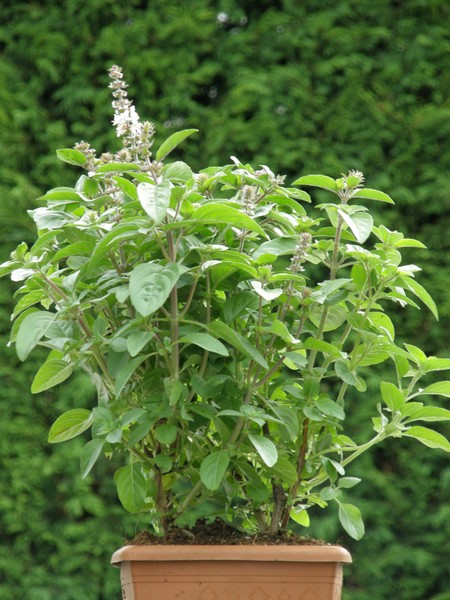
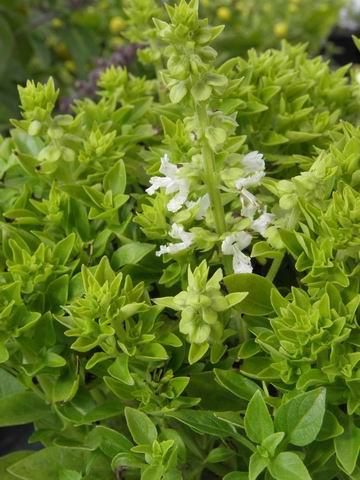 0351- Basilicum 'Minette' |
0244 - Basilicum 'Magic Blue' |
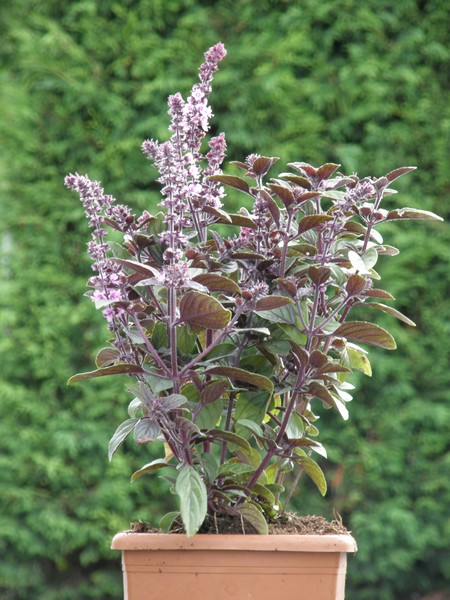 0245 - Basilicum 'Magic White' |
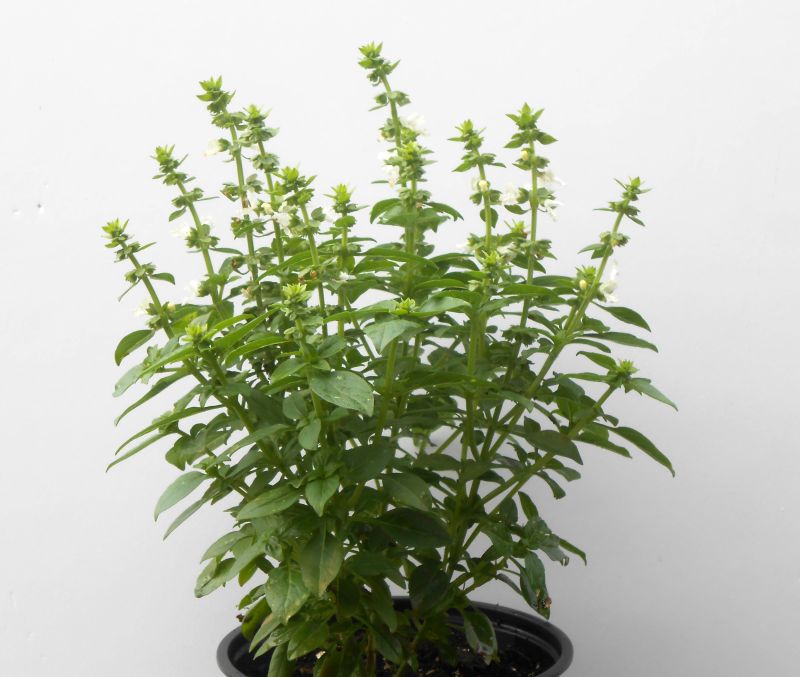 0274 - Basilicum 'Pot Basil' |
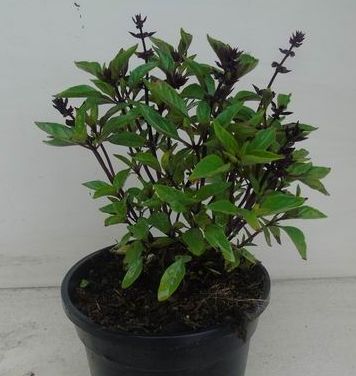 0273- Basilicum thyrisiflorum,'Thai'/'Holy Basil' |
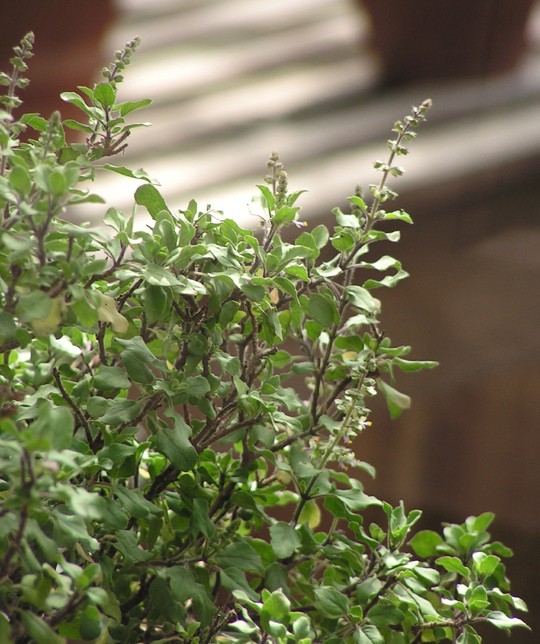 0276 - Basilicum tenuiflorum 'Tulsi' |
|
(Nederlands) Basilicum is inheems in tropische streken van Centraal-Afrika tot Zuidoost-Azië. Het is een tere plant en wordt wereldwijd in keukens gebruikt. Afhankelijk van de soort en cultivar kunnen de bladeren enigszins naar anijs smaken, met een sterke, scherpe, vaak zoete geur. Er zijn veel soorten basilicum, evenals verschillende verwante soorten of hybriden, ook wel basilicum genoemd. Het type dat gewoonlijk als smaak wordt gebruikt, wordt typisch zoete basilicum (of Genovese basilicum) genoemd, in tegenstelling tot Thaise basilicum (O. basilicum var. Thyrsiflora), citroenbasilicum (O. citriodorum) en heilige basilicum (Ocimum tenuiflorum). Hoewel de meest voorkomende basilicumvariëteiten worden behandeld als eenjarige planten, zijn sommige meerjarig in warme, tropische klimaten, waaronder heilige basilicum en een cultivar die bekend staat als "Afrikaanse blauwe basilicum". De verschillende basils hebben zulke verschillende geuren omdat de vluchtige aromatische verbindingen per cultivars variëren. De etherische olie van Europese basilicum bevat hoge concentraties linalool en methylchavicol (estragol), in een verhouding van ongeveer 3: 1. Er zijn veel rituelen en overtuigingen die verband houden met basilicum. De Fransen noemen basilicum soms "l'herbe royale" ("koninklijk kruid"), terwijl de Joodse folklore suggereert dat het kracht toevoegt tijdens het vasten. In Portugal wordt basilicum van dwergstruik traditioneel gepresenteerd in een pot, samen met een gedicht en een papieren anjer, aan een geliefde, op de religieuze feestdagen van Sint-Jan en Sint-Antonius. Basilicum vertegenwoordigde echter haat in het oude Griekenland. Heilige basilicum, ook wel tulsi genoemd, wordt zeer vereerd in het hindoeïsme. Basilicum wordt meestal vers in recepten gebruikt. Over het algemeen wordt het op het laatste moment toegevoegd, omdat koken de smaak snel vernietigt. Het verse kruid kan kort worden bewaard in plastic zakjes in de koelkast, of voor langere tijd in de vriezer, nadat het snel is geblancheerd in kokend water. Basilicum lijdt aan verschillende plantpathogenen die het gewas kunnen ruïneren en de opbrengst kunnen verminderen. Fusariumverwelking is een door de bodem overgedragen schimmelziekte die jongere basilicumplanten snel zal doden. Zaailingen kunnen worden gedood door Pythium ('dempen'). (English) Basil is native to tropical regions from central Africa to Southeast Asia. It is a tender plant, and is used in cuisines worldwide. Depending on the species and cultivar, the leaves may taste somewhat like anise, with a strong, pungent, often sweet smell. There are many varieties of basil, as well as several related species or hybrids also called basil. The type used commonly as a flavor is typically called sweet basil (or Genovese basil), as opposed to Thai basil (O. basilicum var. thyrsiflora), lemon basil (O. citriodorum), and holy basil (Ocimum tenuiflorum). While most common varieties of basil are treated as annuals, some are perennial in warm, tropical climates, including holy basil and a cultivar known as "African blue basil". The various basils have such distinct scents because the volatile aromatic compounds vary with cultivars. The essential oil from European basil contains high concentrations of linalool and methyl chavicol (estragole), in a ratio of about 3:1. There are many rituals and beliefs associated with basil. The French sometimes call basil "l'herbe royale" ("royal herb"), while Jewish folklore suggests it adds strength while fasting.In Portugal, dwarf bush basil is traditionally presented in a pot, together with a poem and a paper carnation, to a sweetheart, on the religious holidays of Saint John and Saint Anthony. However, basil represented hatred in ancient Greece. Holy basil, also called tulsi, is highly revered in Hinduism. Basil is most commonly used fresh in recipes. In general, it is added at the last moment, as cooking quickly destroys the flavor. The fresh herb can be kept for a short time in plastic bags in the refrigerator, or for a longer period in the freezer, after being blanched quickly in boiling water. Basil suffers from several plant pathogens that can ruin the crop and reduce yield. Fusarium wilt is a soil-borne fungal disease that will quickly kill younger basil plants. Seedlings may be killed by Pythium ('damping off'). |